OUR SERVICES

POS Systems

POS software built around how Pakistani retail and hospitality actually run — multiple outlets, local payment methods, real inventory.

POS Systems icon Backed by 12+ years of hands-on delivery experience
Contact Us About This Service
POS Systems
1+
Systems Deployed
1M+
Transactions Processed
1%
Uptime
1+
Outlets Supported

OUR EXPERTISE

POS Engineering Expertise

Retail POS Development
1%
Inventory Systems
1%
Payment Integration
1%
Multi-Outlet Sync
1%

ABOUT THIS SERVICE

Everything POS Systems Covers

Custom POS software built for how Pakistani retail and hospitality businesses actually operate — not a generic system designed for a different market.

Off-the-shelf POS software often assumes tax rules, payment methods, and inventory workflows that don't match how local businesses run day to day. We build point-of-sale systems around your actual operation — multiple outlets, local payment methods, and the specific inventory or table-management flow your business needs.

  • Retail POS software with inventory tracking
  • Restaurant and hospitality POS with table/order management
  • Multi-outlet and multi-branch support
  • Sales reporting and staff access controls
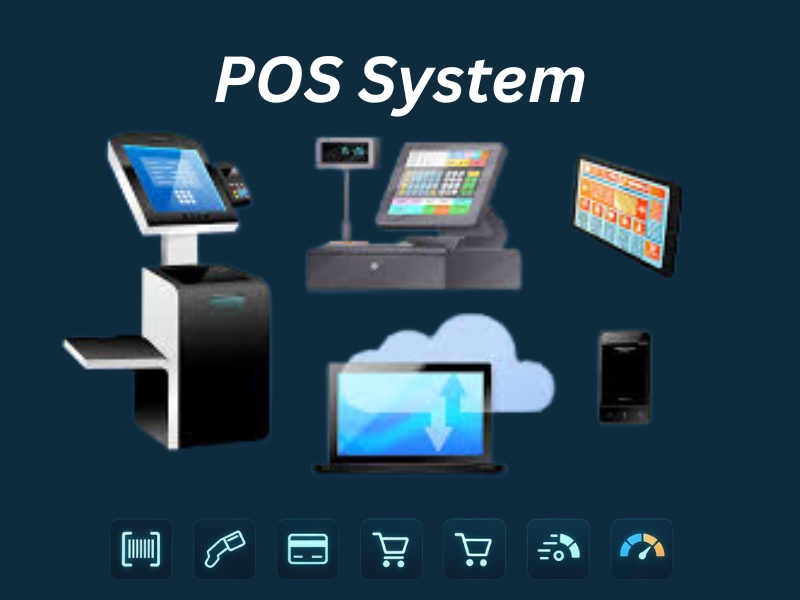
POS Systems illustration

CLIENT FEEDBACK

What It's Like Working With Us

The team understood exactly what we needed without endless back-and-forth. Communication was clear from kickoff to launch.

Bilal A.

Operations Manager, Retail Business

What stood out was how they explained technical decisions in plain language — we always knew what was being built and why.

Sarah K.

Founder, E-Commerce Startup

Delivered on the agreed timeline with no surprises on cost. Post-launch support has been just as responsive as the build phase.

Ahmed R.

Director, Healthcare Provider

Working across time zones was seamless — updates were proactive and the final result matched the brief closely.

Emily T.

Marketing Lead, US-Based Client

Illustrative examples — reach out for references from recent clients.

READY TO START?

Let's Talk About POS Systems.

Tell us your goals and we'll get back to you within 24 hours with a clear next step — no obligation.

FAQS

Smart Retail & Hospitality Solutions Built for Speed

A modern POS system processes sales and payments, but also manages inventory in real time, tracks staff and shifts, records customer purchase history, and feeds sales data into reporting and accounting — a business hub, not just a till. Businesses that pick a POS based on payment processing alone often discover the inventory or reporting side is weak only after it's already in daily use and hard to switch away from. NextStep scopes the inventory, staff, and reporting requirements up front alongside payments, specifically so that gap doesn't surface after launch.

Cloud-based POS systems are accessible from anywhere, update automatically, and typically cost less upfront (subscription-based); on-premise systems run entirely on local hardware, don't depend on an internet connection to process a sale, and suit a business in an area with unreliable connectivity. The right choice depends mainly on connectivity reliability and whether a business needs remote access to sales data (multi-location retail benefits heavily from cloud); a single-location business with unreliable local internet may still be better served on-premise, or on a hybrid system with local fallback. NextStep builds hybrid systems that keep working offline and sync once connectivity returns, which is usually the practical answer for a business that doesn't want to choose between the two trade-offs.

Total POS cost has two separate components that are often quoted together but shouldn't be confused: the software (design, development, and any ongoing licensing) and the hardware (terminal, card reader, receipt printer, barcode scanner), which can be sourced separately and varies widely by brand and feature level. Custom-built POS software costs more upfront than an off-the-shelf subscription product but removes the recurring per-transaction or per-seat fees many commercial POS platforms charge indefinitely. NextStep quotes software and hardware as clearly separate line items so a client can see exactly what's driving the total, rather than one bundled number that hides which part costs what.

It depends entirely on how the system is architected — a purely cloud-based POS with no offline mode stops processing sales the moment connectivity drops, which is a serious risk for a business in an area with unreliable internet. A properly built hybrid POS continues processing sales locally during an outage and syncs everything to the cloud automatically once the connection returns, so no sale is lost and no manual re-entry is needed afterward. NextStep builds offline-capable POS systems as the default for retail and hospitality clients specifically because a payment system that can't take payments during an outage isn't solving the problem it exists to solve.

Retail POS is built around SKU-level inventory, barcode scanning, and stock across variants (size, color); restaurant/hospitality POS is built around table and order management, kitchen display integration, split bills, and tips — genuinely different core workflows even though both ultimately process a payment. Using a system built for the wrong category tends to work "well enough" at first but creates constant workarounds once daily volume increases — a retail system awkwardly repurposed for table service, or the reverse. NextStep builds against the specific workflow (retail or hospitality) from the start rather than adapting a generic template to fit either.